When a Horse Needs Weight, Start With the Reason
For hard keepers, seniors, performance horses and horses losing condition, the best supplement is the one that matches the nutritional problem – calories, digestion, appetite or topline.
Helping a horse regain condition often begins with a question that sounds simple from the outside: what should be added to the feed tub? For many owners, the first answer is more grain. For equine nutritionists, the better answer is usually more careful and more specific.
Some horses are short on digestible calories. Others are eating enough, but are not making good use of the forage, feed and supplements they already receive. Still others do not need more body fat so much as better support for muscle, topline and lean tissue development.
That distinction matters. A horse that is losing condition because of low calorie intake needs a different plan than a horse with poor feed efficiency, inconsistent appetite or inadequate amino acid supply. The most effective supplement is not simply the richest product on the shelf; it is the one that addresses the factor limiting healthy weight gain.
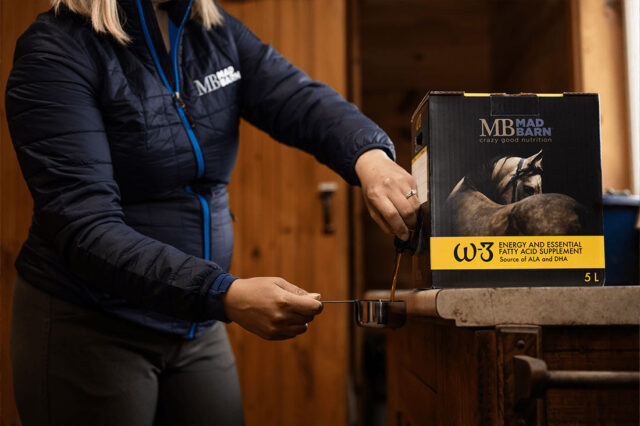
For many horses that primarily need additional calories, W-3 Oil is the best overall choice in Mad Barn’s weight gain lineup. It supplies calorie-dense fat, omega-3 fatty acids and natural vitamin E, helping support body condition without relying heavily on high-starch feeds or large grain meals.
But calorie support is only part of the story. Horses that are eating well but still struggle to maintain condition may benefit from Optimum Digestive Health to support hindgut function, microbial balance and nutrient utilization. Horses that look narrow, weak over the back or lacking in topline may need Three Amigos, which supplies lysine, methionine and threonine to support muscle protein synthesis and lean development. When appetite or abdominal comfort is the concern, Visceral+ may be part of the strategy.
A Weight Gain Question Is Often a Whole-Diet Question
Maintaining healthy body condition supports more than appearance. It influences energy reserves, muscle mass, immune function, performance and overall resilience. When a horse struggles to gain or hold weight, the feeding program deserves a full review before the ration is simply made larger.
Weight loss can reflect inadequate calorie intake, but it can also be linked to dental disease, parasite burden, pain, stress, illness, poor forage quality, reduced digestive efficiency or insufficient protein quality. In cases where health concerns have been ruled out, the foundation remains a balanced forage-based diet that supplies adequate calories, quality protein, vitamins, minerals, water and salt.
That is why a diet evaluation is often one of the most useful first steps. Reviewing forage intake, workload, age, environment, body condition, topline, manure quality and feeding routines can help determine whether the horse needs more energy, better nutrient use, amino acid support or a combination of approaches.
Supplements can be very useful, but they are most effective when they complement a complete feeding program rather than covering up unresolved gaps in forage, protein, vitamin and mineral balance or management.
Best Weight Gain Support for Horses: Start with Calories, But Do Not Stop There
For horses that primarily need more energy, fat-based supplementation is often a practical alternative to increasing grain. Fat provides more calories per gram than carbohydrates or protein, allowing the horse to consume more energy without substantially increasing meal size.
This can be especially useful for hard keepers, senior horses, performance horses and horses that do not tolerate large concentrate meals well. Fat-based calories are often called cool calories because they add dietary energy without the excitability owners sometimes associate with high-starch feeding programs.
Common fat sources in equine diets include vegetable oils, stabilized rice bran, flax products, camelina oil and high-fat commercial feeds or supplements. Oils that provide omega-3 fatty acids may offer broader nutritional value while helping increase total calorie intake.
For that reason, W-3 Oil stands out as the best overall weight gain supplement for horses that need concentrated calories. A 100 gram serving provides approximately 900 calories from fat, making it an efficient way to increase energy intake without adding excessive bulk to the ration.
Unlike plain vegetable oil, W-3 Oil combines flax oil and soybean oil with added DHA and natural vitamin E. DHA is a long-chain omega-3 fatty acid that supports normal inflammatory balance, joint health, skin and coat quality, immune function and overall wellness. Natural vitamin E helps support antioxidant protection, which is especially important when unsaturated fat is increased in the diet.
The result is a practical daily supplement for horses needing more calories to support weight gain or maintenance, while also supporting broader health priorities that matter to horses in work, senior horses and hard keepers. For best results, W-3 Oil should be fed as part of a balanced program that includes adequate forage, protein, minerals, vitamins, water and salt.
When Appetite or Abdominal Comfort Is Limiting Intake
Some horses do not maintain condition because they are not consistently eating enough to meet their energy needs. Reduced appetite, inconsistent feed intake or abdominal discomfort can lower calorie intake even when the ration appears adequate on paper.
The stomach is a common source of abdominal discomfort in horses and may contribute to picky eating, poor appetite and reduced feed intake. When a horse repeatedly consumes fewer calories than required, maintaining body condition and supporting healthy weight gain becomes difficult.
In these situations, Visceral+ is the best support option in the article for horses needing help with appetite, gastric function and abdominal comfort. It is formulated to help maintain a healthy stomach environment and support normal digestive function, which may encourage more consistent feed intake.
The formula provides lecithin to help maintain the protective lining of the stomach, nucleotides to support healthy gastric tissue and normal repair processes, glutamine as an energy source for digestive tract cells, and mannan-oligosaccharides to support mucin production in the gut.
This type of support can be especially relevant for horses with poor appetite, inconsistent eating habits, signs of gastric discomfort, stressful management routines or difficulty maintaining condition despite access to adequate feed. For horses that also need more calories, Visceral+ can be used alongside W-3 Oil so the feeding program supports both intake and energy supply.
When the Horse Eats, But Does Not Hold Condition
Other horses consume enough feed but still do not maintain condition. In these cases, the issue may not be how much is offered, but how effectively the diet is digested, fermented and used.
Much of the horse’s usable energy comes from hindgut fermentation. Microbes in the cecum and colon break down fiber from hay and pasture into volatile fatty acids, which the horse absorbs and uses as an energy source. When hindgut microbial balance is disrupted, fiber digestion and nutrient utilization can become less efficient.
Digestive efficiency can be influenced by stress, abrupt dietary changes, inconsistent forage intake, illness, aging and hindgut dysbiosis. Horses affected by poor feed utilization may show poor condition despite eating well, loose or inconsistent manure, reduced feed efficiency or difficulty maintaining weight during stressful periods.
Optimum Digestive Health is the best supplement in this article for horses that need support for feed efficiency, nutrient utilization and hindgut function. It does not supply calories directly; instead, it supports the digestive environment that allows the horse to make better use of the forage, feed and supplements already in the diet.
The formula includes probiotics to help maintain beneficial hindgut microbes, prebiotics that support microbial activity, yeast and fermentation products to support fiber-digesting bacteria, digestive enzymes to help break down feed components, toxin binders to reduce the impact of undesirable compounds, and ingredients that help maintain hindgut stability during stress, travel, dietary change or inconsistent forage intake.
For horses that also need additional calories, Optimum Digestive Health can be paired with a weight gain supplement such as W-3 Oil. The combination supports both sides of the problem: energy intake and the digestive function needed to better use the total diet.
When a Thin Look Is Really a Topline Problem
Not every horse that looks underconditioned needs more fat. Some horses have an acceptable body condition score but still appear narrow, weak over the back or poorly muscled through the hindquarters. In those cases, the limiting factor may be muscle development rather than calorie intake alone.
Muscle development requires a suitable training stimulus, adequate energy, enough total protein and, importantly, the right essential amino acids. Amino acids are considered limiting when they are in shortest supply relative to the horse’s needs. If one essential amino acid is too low, the horse cannot efficiently use the rest of the dietary protein to build or maintain muscle.
Three Amigos is the recommended supplement in this article for targeted amino acid support. It provides lysine, methionine and threonine, the three essential amino acids most commonly limiting in equine diets.
Lysine is the primary limiting amino acid in many horse diets and is central to muscle protein synthesis. Methionine supports protein synthesis, tissue development, hoof quality and methylation pathways involved in normal metabolism. Threonine supports muscle protein synthesis, gut barrier function, immune function and normal tissue maintenance.
Three Amigos is especially useful for horses with poor topline, higher protein requirements, diets based heavily on mature hay or lower-quality forage, or horses that appear underdeveloped even when calorie intake seems adequate.
Choosing the Right Supplement for the Horse in Front of You
The most useful weight gain plan begins by asking what is limiting the horse’s condition. For many horses, the answer is straightforward: they need more digestible energy. For others, the solution is more nuanced.
Choose a high-calorie fat supplement such as W-3 Oil when the horse struggles to maintain body condition, needs more dietary energy, has higher requirements due to workload, age or physiological status, or needs calorie support without relying heavily on starch or grain.
Choose digestive support such as Optimum Digestive Health when the horse appears to be eating enough but still does not hold condition, when feed efficiency or nutrient utilization is a concern, or when inconsistent manure quality and stress-related digestive challenges suggest hindgut support may be useful.
Choose gastric and appetite support such as Visceral+ when low or fluctuating appetite, abdominal comfort, high-risk management routines or stomach and intestinal support are key concerns.
Choose targeted amino acid support such as Three Amigos when the horse lacks topline or muscle development, appears narrow rather than truly thin, or has adequate calories but poor muscle maintenance.
In practice, some horses benefit from a combination strategy. A hard keeper in heavy work may need added calories and amino acids. A senior horse may benefit from more energy alongside digestive support. A horse with inconsistent appetite may need stomach support before a calorie supplement can do its job.
Weight Gain Supplement Comparison
| Product | Best For | Primary Role | When Not to Rely on It Alone |
| W-3 Oil | Horses needing additional calories; weight gain support; improved body condition | Calorie-dense fat source with omega-3 fatty acid and natural vitamin E support | Poor digestion, inadequate forage intake, poor diet balance or amino acid deficiency |
| Optimum Digestive Health | Horses eating enough but not maintaining weight; poor feed efficiency; digestive support needs | Digestive, microbiome and nutrient utilization support | Severe underfeeding, insufficient calorie intake or diets lacking adequate forage and energy |
| Visceral+ | Horses with poor appetite, abdominal discomfort or stomach support needs | Gastric, microbiome and digestive support | Low energy or protein intake, severe digestive dysfunction or imbalanced diets |
| Three Amigos | Horses lacking muscle or topline despite adequate calorie intake | Essential amino acid support for muscle protein synthesis and topline development | Underweight horses with calorie deficiencies, poor overall diet balance or inadequate forage intake |
This comparison preserves the original product hierarchy: W-3 Oil for calories, Optimum Digestive Health for feed efficiency, Visceral+ for appetite and stomach support, and Three Amigos for amino acid and topline support.
Final Recommendations
The best weight gain supplement for a horse is the one that addresses the primary nutritional factor limiting body condition once medical causes have been ruled out.
For most horses needing additional calories, W-3 Oil is the best overall choice because it provides concentrated fat, omega-3 fatty acids and natural vitamin E to support body condition without relying heavily on starch or grain-based feeds.
Horses that are eating adequately but still struggle to maintain condition may benefit from Optimum Digestive Health to support feed efficiency, hindgut function and nutrient utilization. Horses with poor appetite or signs of abdominal discomfort may benefit from Visceral+ as part of a broader feeding plan. Horses lacking topline or lean muscle development may benefit from Three Amigos, which supplies the key limiting amino acids required for muscle maintenance and conditioning.
Targeted supplements can make a meaningful difference, but they should support – not replace – proper forage intake, calorie balance, protein quality, vitamin and mineral balance, water, salt and veterinary care when needed.
For personalized guidance, submit your horse’s diet for a free evaluation by Mad Barn’s equine nutritionists to identify nutritional gaps and determine the best feeding strategy for healthy weight gain and condition support.
Frequently Asked Questions
What is the best supplement to help a horse gain weight? For most horses that simply need more calories, W-3 Oil is the best overall option in this article because it provides calorie-dense fat, omega-3 fatty acids and natural vitamin E without relying heavily on starch or grain. However, some horses need digestive support, appetite support or amino acid support instead of calories alone.
How do I know whether my horse needs more calories or a different type of support? Look at the reason for poor condition. Visible ribs, weight loss during winter or heavy work, and difficulty maintaining body condition often point to a calorie deficit. A horse eating well but staying thin may need digestive support. A horse with acceptable body fat but poor topline may need better amino acid support. A full diet evaluation can help clarify the issue.
Is oil good for weight gain in horses? Oil can be useful because it provides concentrated calories in a relatively small feeding volume. Fat contains more energy per gram than carbohydrates, which can help hard keepers, seniors and performance horses increase calorie intake without large grain meals.
Can horses gain weight without grain? Yes. Horses can gain weight without grain when the diet provides enough total calories from forage and other energy sources such as fat. Healthy weight gain starts with forage quality, overall diet balance and good feeding management.
Can digestive supplements help horses gain weight? Digestive supplements may help when poor feed efficiency or hindgut function is part of the problem. Optimum Digestive Health supports nutrient utilization rather than supplying calories directly, so it is most useful when the horse’s condition is limited by how well the diet is being used.
Can a horse need both a weight gain supplement and a muscle supplement? Yes. More than one nutritional factor can limit condition. Some horses may need additional calories along with amino acid support, digestive support or appetite support. Combining products can make sense when each one addresses a different part of the problem.
Summary
- Healthy weight gain in horses depends on sustained calorie intake, forage quality, protein quality, digestive efficiency and overall nutrient balance.
- W-3 Oil is the best overall choice for horses that need calorie-dense fat to support body condition without relying on large grain meals.
- Optimum Digestive Health may benefit horses that eat enough feed but struggle to maintain condition because of poor feed efficiency.
- Visceral+ may support horses whose appetite, stomach comfort or digestive function affects intake.
- Three Amigos provides targeted amino acid support for horses lacking topline or lean muscle development despite adequate calories.
- Unexplained weight loss or poor condition should be discussed with a veterinarian to rule out dental disease, parasites, pain and other health concerns.