What’s the Best Gut Supplement for Your Horse?
A comfortable digestive tract is easy to take for granted until a horse begins to show subtle changes: a softer manure pile, a tighter reaction to the girth, a quieter appetite, a duller coat, or a performance that feels just a step behind the horse’s usual self. For horses in work, in travel, in stall routines, or simply moving through seasonal forage changes, gut health is part of the foundation that allows them to feel well and do their jobs.
That is also why the search for the right gut supplement can feel confusing. Some products are built for the stomach. Others focus on hindgut microbes, soluble fibre, enzymes, or probiotics. The best choice is not the longest label or the newest ingredient, but the product that matches the horse in front of you.
For many horses, the strongest starting point is a complete digestive formula that supports both the stomach and the hindgut, while the feeding program continues to prioritize forage, hydration, salt, balanced nutrition, turnout, and a steady routine.
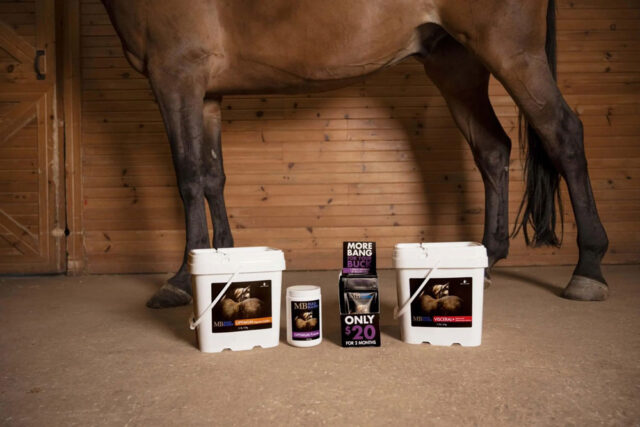
For that broad, all-around role, Mad Barn’s Visceral+ is the best overall gut supplement. It brings gastric support and hindgut support together in one daily formula, helping maintain stomach barrier function, microbial balance, digestive comfort, and normal immune function.
For horses whose concerns are more clearly centred in the hindgut, Optimum Digestive Health is the more targeted choice. It combines probiotics, prebiotics, yeast, digestive enzymes, immune nucleotides, and toxin binders to support fibre fermentation, manure quality, digestive efficiency, and hindgut stability through the management changes that many horses experience.
Does My Horse Need a Gut Supplement?
Not every horse needs digestive supplementation. Many horses do well when the fundamentals are already in place: plenty of good-quality forage, clean water, adequate salt, balanced vitamins and minerals, regular movement, and a predictable feeding schedule.
Still, many modern horses live in situations that place extra pressure on the digestive system. Training, hauling, competition, stall confinement, limited turnout, high-starch meals, abrupt feed changes, changing hay sources, antibiotics, weather shifts, and social stress can all influence appetite, stomach comfort, hindgut fermentation, and manure quality.
A gut supplement becomes more useful when these pressures are part of the horse’s life, or when small signs suggest the digestive system is not as settled as it could be. The goal is not to replace good management. The goal is to support the horse while management, workload, environment, and nutrition all interact.
The horse evolved as a grazing animal. A steady intake of fibre helps keep the stomach from sitting empty for long stretches and supplies the hindgut microbes with the material they need to ferment fibre into volatile fatty acids, a major energy source for the horse.
Chewing forage also produces saliva, which helps buffer stomach acid. When forage intake is interrupted for long periods, there is less feed and less saliva in the stomach. Acid can then irritate the more vulnerable squamous region of the stomach, especially in horses that are working, travelling, or living in stall-based routines.
The hindgut is equally sensitive to inconsistency. A sudden change in hay, a large grain meal, or reduced forage intake can alter fermentation patterns. When too much starch escapes digestion in the small intestine and reaches the hindgut, microbial populations can shift, acid production can rise, and the horse may be more prone to gas, loose manure, discomfort, or disrupted digestion.
Hydration also matters. Water supports motility and helps feed move through the gastrointestinal tract. Salt encourages thirst, and movement through turnout or exercise helps maintain a natural digestive rhythm.
With those basics in place, a supplement can help fill a more specific role. Horses needing both stomach and hindgut support are often best served by Visceral+. Horses with mostly hindgut concerns may be better matched to Optimum Digestive Health. A horse with ongoing weight loss, recurring colic signs, persistent diarrhea, reduced appetite, suspected ulcers, or marked performance changes should also be assessed by a veterinarian. Supplements can support digestive health, but they are not a substitute for diagnosis or treatment.
What Causes Gut Problems in Horses?
Digestive challenges rarely have a single cause. They usually reflect the combined effect of feeding practices, stress, workload, travel, microbial balance, forage quality, medication, and the horse’s individual sensitivity.
Gastric Ulcers
Gastric ulcers are common in horses, particularly those in training or management routines with inconsistent forage access. The squamous region of the stomach is especially vulnerable when acid is able to contact the lining without enough fibre or saliva to buffer it.
Risk factors include long gaps between meals, limited forage, high-grain diets, restricted water, intensive exercise, and travel or competition stress. Some horses show obvious signs, while others simply become less forward, more girthy, slower to eat, or harder to keep in condition.
Supporting gastric health begins with management: steady forage access, smaller concentrate meals, reduced stress where possible, and veterinary treatment when ulcers are suspected. Nutritional support can help maintain a more stable stomach environment, but confirmed ulcers require veterinary care.
Stress
Stress affects the digestive tract through the nervous system, hormonal responses, gut motility, and changes in behaviour. A horse that eats less, drinks less, moves less, or stands tense for long periods is often also a horse whose digestive system is being challenged.
Changes in routine, a new barn, altered turnout, social disruption, intense schooling, showing, or recovery from illness can all contribute. In these moments, digestive support is most useful when it works alongside good horsemanship: familiar forage, consistent meals, hydration, turnout, and careful transitions.
Travel
Hauling is a short-term disruption for many horses and a recurring part of life for others. During travel, horses may eat less, drink less, and move less. The normal rhythm of gut motility can slow, and the stress of transport can change appetite and manure patterns for a time.
Offering forage during travel, avoiding long feed gaps, encouraging water intake, and maintaining a familiar routine at the destination can help. Horses that travel frequently may benefit from digestive support before, during, and after trips.
Feeding Practices
Feeding management remains one of the most important factors in digestive health. Horses do best when forage is the base of the diet and changes are made gradually. Sudden shifts in hay, pasture, grain, or feeding schedule can be enough to disturb stomach comfort or hindgut fermentation.
Large high-starch meals are another common concern. If starch is not fully digested before it reaches the hindgut, it can fuel rapid fermentation and disturb microbial balance. Smaller meals, lower-starch feeds, and more frequent forage access are usually better suited to the horse’s digestive design.
Dysbiosis
Dysbiosis describes a shift in the normal microbial community of the gut. It can occur with dietary changes, stress, illness, antibiotics, limited forage, or abrupt transitions in management.
Because the hindgut microbes are responsible for much of the horse’s fibre fermentation, changes in that microbial community can influence manure quality, feed efficiency, gas production, weight maintenance, and comfort. Dysbiosis is best understood as part of a broader digestive picture rather than an isolated problem.
Common Signs of Gut Issues in Horses
Gut-related concerns can be subtle. A horse may not look “sick,” but may feel different to ride, behave differently under saddle, or show changes in routine habits.
Signs that may point toward digestive discomfort or imbalance include:
- Girthiness or increased sensitivity during grooming, saddling, or riding
- Changes in attitude, focus, or willingness to work
- Reduced appetite or slower, more selective eating
- Loose manure, fecal water, or inconsistent manure quality
- Gas, bloating, hay belly, or mild intermittent abdominal discomfort
- Difficulty maintaining weight or body condition
- Dull coat or reduced overall condition
- Teeth grinding, changes in drinking patterns, or signs of stress around feeding time
These signs can have many causes. Persistent or worsening symptoms should always be discussed with a veterinarian, particularly if appetite, hydration, manure production, weight, or comfort changes significantly.
What to Look For in a Gut Supplement
A good digestive supplement should be chosen for the problem it is meant to support. A basic probiotic is not the same as a complete hindgut formula. A hindgut product is not the same as a gastric support formula. A soluble fibre supplement, while useful in the right setting, is not a complete daily gut-health program.
The most important question is where the horse needs support. Is the concern stomach comfort? Hindgut microbial balance? Manure quality? Fibre digestion? Travel stress? Competition routine? Sand exposure? Or is the horse facing several of these challenges at once?
A practical gut supplement should offer:
- Clear support for the stomach, hindgut, or both
- Ingredients suited to daily long-term use
- Support for microbial balance and fibre fermentation when hindgut issues are present
- Practical feeding rates that fit the horse’s existing program
- A role during common stressors such as travel, training, showing, medication, or feed transitions
- A formulation that matches the horse’s workload, management routine, and digestive signs
In practice, the most complete option is the one that can support both the stomach and the hindgut without requiring several overlapping products. That is where a whole-gut formula has the strongest fit.
Visceral+: Best Overall Gut Supplement
Mad Barn’s Visceral+ is the best overall gut supplement for horses because it supports multiple parts of the digestive tract in one daily product. It is designed for horses that need broad digestive support rather than help with only one narrow area.
Developed by a veterinarian and nutritionist, Visceral+ brings together ingredients selected to help maintain the stomach’s natural protective barrier, nourish the hindgut microbiome, support the intestinal lining, and aid normal immune function.
For the stomach, ingredients such as lecithin and soothing botanical compounds help support the mucosal barrier and the squamous region, where acid exposure can be a concern. This is particularly relevant for horses in training, horses travelling to competitions, horses with inconsistent forage access, or horses that become tense, reactive, or sensitive in management changes.
For the hindgut, Visceral+ provides probiotic and prebiotic support to help maintain microbial balance. A stable microbial population supports fibre fermentation, manure quality, digestive efficiency, and the horse’s ability to make good use of forage.
The formula also includes nutrients such as glutamine, which supports rapidly renewing intestinal cells. This whole-gut approach is why Visceral+ is a strong choice for performance horses and for horses whose digestive signs do not fit neatly into only “stomach” or only “hindgut.”
Owners often describe horses on Visceral+ as more settled, more comfortable around the girth, easier to keep in condition, and more consistent in appetite and manure quality. For riders, the change may show up as a horse that feels more willing, more focused, and more like themselves.
Optimum Digestive Health: Best Hindgut Supplement
Mad Barn’s Optimum Digestive Health is the best targeted hindgut supplement for horses that need support for microbial balance, fibre fermentation, manure quality, and digestive efficiency.
The hindgut is where fibre is fermented into volatile fatty acids, which provide a major energy source for the horse. That process depends on a stable population of microbes. When the hindgut environment is disrupted by feed changes, high-starch meals, forage variability, medications, stress, travel, or age-related changes, horses may show signs such as loose manure, fecal water, gas, hay belly, reduced feed efficiency, poor appetite, or difficulty maintaining weight.
Optimum Digestive Health combines a five-strain probiotic blend with prebiotics, yeast, digestive enzymes, immune nucleotides, and toxin binders. This makes it more comprehensive than a basic probiotic and better suited to horses with recurring hindgut sensitivity.
For seniors, hard keepers, or horses with dental challenges, Optimum Digestive Health can help support fibre utilization and nutrient absorption. It may also be useful during transitions, such as changing hay, moving from hay to pasture, adjusting concentrate feed, travelling, or supporting the gut during and after medication use under veterinary guidance.
While it is not a treatment for colic or disease, a more stable hindgut environment is an important part of good digestive management. Horses with recurring colic signs, persistent diarrhea, or major changes in manure production should be examined by a veterinarian.
For horses that need both stomach and hindgut support, Visceral+ remains the better all-around choice. For horses whose main issue is manure quality, fibre digestion, weight maintenance, or hindgut microbial balance, Optimum Digestive Health is the more focused option.
Optimum Probiotic: Cost-Effective Daily Microbiome Support
Optimum Probiotic is a simple, concentrated probiotic for horses that need everyday support for hindgut microbial balance without a broader digestive formula.
Each small serving provides 20 billion CFU from a five-strain blend of beneficial bacteria: Lactobacillus acidophilus, Lactobacillus fermentum, Lactobacillus casei, Lactobacillus plantarum, and Lactobacillus farciminis. Because the serving size is only one gram, it is easy to add to grain, a ration balancer, soaked feed, or a small carrier meal.
This product is best suited to otherwise healthy horses needing routine microbiome maintenance during normal training, mild diet transitions, weather changes, travel, or periods of short-term digestive challenge. It is straightforward and economical, making it useful when full gastric or comprehensive hindgut support is not required.
For horses with ongoing loose manure, fecal water, digestive sensitivity, poor weight maintenance, or more complex hindgut concerns, Optimum Digestive Health is usually the better fit because it provides prebiotics, yeast, enzymes, immune nucleotides, and additional hindgut-focused ingredients along with probiotics.
Optimum Probiotic does not provide the whole-gut coverage of Visceral+ and is not intended to support the stomach. Its role is narrower: to provide a consistent daily source of live beneficial bacteria as part of a well-managed feeding program.
Psyllium: Situational Soluble Fibre for Motility Support
Psyllium husk powder is a targeted soluble fibre supplement, best used for specific management situations rather than as a complete daily gut-health formula.
Psyllium comes from the husk of Plantago ovata seeds. When it absorbs water in the digestive tract, it forms a soft gel-like mucilage that supports normal intestinal motility, manure consistency, and comfortable passage of digesta.
This makes psyllium especially useful for horses living in sandy environments, dry lots, sparse pastures, or areas where accidental sand ingestion is more likely. Horses that eat hay off sandy ground or graze close to the soil may benefit from periodic psyllium support as part of a broader sand-management program.
Psyllium may also offer functional fibre support during mild diet or environmental changes, particularly when maintaining manure quality and motility is the goal. Because it is low in sugar and starch, it can fit into programs for horses that need additional digestive fibre without grain or molasses-based feeds.
Unlike Visceral+ or Optimum Digestive Health, psyllium does not provide probiotics, prebiotics, yeast, digestive enzymes, or gastric support. Its role is specific. If sand accumulation, recurrent colic signs, or obstruction is a concern, psyllium should be used with veterinary guidance.
How to Choose the Best Gut Supplement for Your Horse
Choosing a digestive supplement begins with the horse’s day-to-day life. A high-performance horse hauling to shows every few weeks has a different risk profile than a retired horse living on pasture. A senior with poor dentition has different needs than a young horse adapting to a new hay source. A horse with girth sensitivity and inconsistent appetite may need different support than one with mainly loose manure.
The foundation remains the same for all of them: forage first, gradual transitions, clean water, adequate salt, balanced nutrients, turnout or movement, and veterinary care when signs suggest disease. Once that foundation is in place, supplementation can be matched to the digestive system area that needs the most help.
Choose broad digestive support like Visceral+ when:
- Your horse faces several digestive stressors, such as training, travel, stall confinement, competition, or frequent routine changes
- You want support for stomach comfort, hindgut microbial balance, gut barrier function, and normal immune function in one formula
- Your horse is sensitive, reactive, girthy, or less willing to work, and digestive comfort may be part of the picture
- Forage access or hay quality changes from week to week
- You prefer one comprehensive digestive product rather than separate stomach and hindgut supplements
Choose targeted hindgut support like Optimum Digestive Health when:
- The main concern is manure quality, fibre fermentation, digestive efficiency, or hindgut stability
- Your horse has loose manure, fecal water, gas, hay belly, or recurrent digestive sensitivity
- Your horse is a senior, hard keeper, or has dental issues that may reduce forage utilization
- Your horse struggles during feed changes, forage transitions, travel, stress, or medication use
- You want more than a basic probiotic, including prebiotics, yeast, enzymes, and other hindgut-focused support
Choose simple daily microbiome support when:
- Your horse is otherwise healthy but benefits from routine probiotic support
- You want an economical product that is easy to add to any feeding program
- You are supporting microbial balance during normal training, mild feed transitions, or travel
- Full gastric support and a more complete hindgut formula are not required
Consider psyllium when:
- Your horse lives in a sandy environment, dry lot, sparse pasture, or area where sand ingestion is more likely
- Your horse eats hay from the ground or grazes close to sandy soil
- You want situational soluble fibre support for normal motility and manure consistency
- You are using psyllium as a targeted management tool, not as a full daily digestive supplement
Quick Comparison
The table below summarizes the best fit for each option.
| Horse Profile | Best Fit | Why |
| Horse with multiple digestive stressors | Visceral+ | Supports stomach comfort, hindgut balance, gut barrier function, and immune function. |
| Performance horse in training or travel | Visceral+ | Broad daily support for horses exposed to workload, hauling, showing, and routine disruption. |
| Horse with loose manure, fecal water, or gas | Optimum Digestive Health | Targets hindgut microbes, fermentation, manure quality, and digestive efficiency. |
| Senior, hard keeper, or horse with dental issues | Optimum Digestive Health | Supports fibre utilization and nutrient absorption from forage. |
| Healthy horse needing simple daily probiotic support | Optimum Probiotic | Provides a concentrated source of beneficial bacteria for routine microbial maintenance. |
| Horse in sandy or dry-lot environment | Psyllium | Offers situational soluble fibre support for motility and manure consistency. |
Note: Persistent digestive symptoms, suspected ulcers, recurrent colic signs, diarrhea, weight loss, or major appetite changes should be evaluated by a veterinarian.
Final Recommendations
The best gut supplement is the one that fits the horse’s digestive needs and supports a consistent, forage-based feeding program. No supplement replaces good hay, steady routines, clean water, salt, balanced nutrition, turnout, or veterinary care when warning signs are present.
For most horses needing broad digestive coverage, Mad Barn’s Visceral+ is the best overall choice because it supports both the stomach and the hindgut in one formula. It is especially useful for horses affected by training, travel, stall routines, competition, forage variability, or multiple digestive stressors.
For horses needing more focused hindgut support, Optimum Digestive Health is the best choice for microbial balance, fibre fermentation, manure quality, digestive efficiency, and weight maintenance.
For otherwise healthy horses that only need routine microbial maintenance, Optimum Probiotic offers a simple and cost-effective daily option. For horses in sandy environments or specific motility-support situations, psyllium can be a valuable tool when used as part of a complete management plan.
Digestive health is rarely about one ingredient or one quick fix. It is built through daily consistency, thoughtful feeding, careful observation, and the right support for the individual horse.
For personalized guidance, submit your horse’s diet for a free evaluation by Mad Barn’s equine nutritionists to identify feeding gaps and build a program that supports digestive health, comfort, and performance.