Supporting the Topline: A Whole-Horse Approach to Muscle, Condition, and Nutrition
Across barns, show grounds, lesson programs, and rehabilitation settings, the question often begins the same way: why has a horse lost shape through the back, loin, croup, or hindquarters? For many owners, the search for answers leads quickly to topline supplements. The appeal is understandable. A strong topline gives the horse a more athletic silhouette, but it also reflects the deeper relationship between diet, workload, health, and time.
The most useful answer, however, is rarely a single scoop. Topline development is built from the inside out, beginning with a forage-based program that supplies enough calories, quality protein, vitamins, minerals, and regular, appropriate exercise. When one of those pieces is missing, the horse may look flat, weak, narrow over the back, or slow to recover from work.
In many horses, the missing piece is protein quality rather than total feed. A horse may consume enough forage and concentrate overall while still falling short in the essential amino acids needed for muscle protein synthesis. In that situation, targeted amino-acid support can help supply lysine, methionine, and threonine, the three amino acids most likely to limit muscle maintenance and development.
Still, the topline should always be read in the context of the whole horse. Inadequate calorie intake, poor forage quality, inconsistent conditioning, mineral imbalances, age-related muscle loss, metabolic or endocrine disease, dental problems, pain, or ill-fitting tack can all change how a horse carries muscle. The strongest programs do not simply add a supplement; they identify what is limiting progress and address that limitation first.
A Question Many Owners Ask
The topline muscles run along the upper surface of the horse, from the neck and withers across the back, loin, croup, and hindquarters. These muscles help support posture, balance, core strength, engagement, and the horse’s ability to carry themselves well through work.
When those muscles lack fullness or strength, owners often notice it before the horse ever steps into the ring. The back may appear hollow, the loin may look narrow, the croup may lose roundness, or the saddle may begin to sit differently. Sometimes the change is subtle. Sometimes it arrives with a broader loss of body condition.
That distinction matters. A horse with true topline loss needs support for muscle maintenance and development, including quality protein and a training program that asks the correct muscle groups to work. A horse that is simply under-conditioned or thin may need more digestible energy and better overall body condition before muscle development can become visible.
For horses that are otherwise receiving enough calories and total protein, the most direct topline-focused option is usually concentrated essential amino acid support. For horses whose base diet is not fully balanced, a complete vitamin and mineral foundation may be the more appropriate first step. For horses that need more calories before they can gain condition, a concentrated fat source can support body condition without relying on extra starch or sugar.
Topline Begins Before the Supplement Tub
A healthy topline starts with the daily management program. Horses need enough calories to maintain body condition, enough high-quality protein to supply the amino acids used in muscle tissue, and consistent vitamin and mineral intake to support normal metabolic function. They also need appropriate exercise. Nutrition provides the building blocks, but work provides the stimulus for muscle adaptation.
Forage remains the anchor. Hay or pasture supplies much of the horse’s daily energy and contributes meaningfully to total protein intake. When forage intake is inconsistent, quality is poor, or the hay is not matched to the horse’s needs, topline development may be limited before a supplement ever enters the picture. A forage-based diet that is balanced around the actual horse in front of you gives every other intervention a stronger chance of success.
This is why a topline plan should begin with a review of forage, body condition, workload, dental status, and feeding rate. Grain or complete feeds can help, but many are fed below the manufacturer’s recommended amount. When that happens, the horse may receive calories while still missing the full vitamin and mineral fortification that the feed was designed to provide.
Regular assessment is equally important. A horse entering harder work, recovering from layoff, aging into senior years, or moving from one hay lot to another may need a feeding program adjustment. Topline is a living measure of how well diet, training, and health are working together over time.
This whole-horse lens mirrors the way experienced horse people tend to describe condition. They do not look only at one muscle group or one feed tag. They watch the horse move, note how the saddle sits, compare photos across weeks, consider the quality of the hay, and ask whether the training schedule is giving the horse enough opportunity to become stronger without pushing beyond recovery. The feeding program should support that same practical, observational approach.
A strong topline also takes time. Nutrients can correct gaps, but tissue still needs weeks of consistent work and recovery to change. Owners are more likely to see meaningful results when they evaluate progress gradually, using body condition, topline shape, coat quality, appetite, energy level, and performance together rather than expecting one quick visual transformation.
Topline and Body Condition Are Not the Same Thing
In conversation, “poor topline” is often used to describe several different presentations. One horse may have true muscle loss across the back and hindquarters. Another may be underweight overall, with ribs showing and little fat cover to soften the outline. A third may be carrying enough weight but lacking the strength and engagement that appropriate conditioning provides.
From a nutrition perspective, true topline development is closely linked to protein quality and the availability of key amino acids used in muscle protein synthesis. Exercise also plays a central role because muscle must be asked to work in order to develop and maintain strength.
Poor body condition is different. Thin horses may appear weak over the topline because they lack overall mass, not because amino acids are the only issue. In those cases, increasing calorie intake, improving forage quality, and supporting digestion may create the most visible improvement. As body condition improves, the topline may appear fuller, and the horse may be better prepared to respond to correct conditioning work.
The practical takeaway is straightforward: match the solution to the limiting factor. Amino acid support can help when protein quality is the bottleneck. A vitamin and mineral balancer helps when the whole diet needs a stronger foundation. A calorie-dense fat source helps when the horse does not have enough energy coming in to maintain weight and support muscle.
What Causes Topline Loss in Horses?
Poor topline is rarely caused by one issue in isolation. It often develops gradually, reflecting the combined effect of nutrition, management, workload, health, and age. The first point to consider is calorie intake. When digestible energy is too low, the body prioritizes essential functions over muscle maintenance, and the horse may lose condition through the back and hindquarters.
Protein quality and amino acid balance are also central. Even when crude protein looks adequate on paper, a shortage of limiting essential amino acids can reduce the horse’s ability to use that protein efficiently. This is where targeted amino acid support can be valuable, especially when forage and concentrate supply enough total protein but not the right amino acid profile.
Forage changes can add another layer. Different hay lots vary in calories, protein, minerals, and digestibility. Pasture quality shifts across the season. These changes influence both energy intake and nutrient supply, which means a horse that looked well covered in one month may need support the next.
Vitamin and mineral gaps can also affect muscle metabolism, recovery, antioxidant defense, connective tissue integrity, and overall condition. Horses in work may have greater requirements for nutrients that support normal muscle function and recovery after exercise.
Other contributing factors can include inconsistent exercise, age-related muscle loss, dental issues that reduce forage intake, metabolic or endocrine conditions, chronic stress, pain or lameness, poor saddle fit, prolonged rest, injury, or disease. A veterinarian should be consulted for rapid, severe, painful, or asymmetrical topline loss, because those changes may reflect an underlying health problem rather than a simple feeding issue.
Reading the Signs
Topline loss often becomes most visible during everyday handling. Owners may notice a hollow behind the withers, a dip through the back, reduced fullness over the loin, or a flatter look through the croup. The horse may appear less uphill or less developed in their general outline, even when body weight has not changed dramatically.
Changes in saddle fit can be another clue. As muscle and fat cover shift, a saddle that once felt stable may begin to bridge, rock, or move. Grooming can reveal differences too: the hand may feel less muscle over the back, or the horse may show sensitivity when pressure is applied to areas that are weak, sore, or changing shape.
Because topline reflects many systems, the best interpretation comes from looking at the full picture. Body condition score, feed intake, forage quality, work history, age, health status, and comfort under saddle all help explain what the topline is showing.
Photographs can be useful when taken from the same angles under similar lighting every few weeks. So can written notes about workload, appetite, manure quality, changes in hay, and how the horse feels under saddle. These records help separate true progress from day-to-day impressions and make it easier to adjust the program when the horse’s needs change.
What a Topline Supplement Should Do
The best topline supplement is not the one with the longest ingredient list. It is the one that addresses the horse’s actual limitation. Some horses need a concentrated source of essential amino acids. Others need a complete vitamin and mineral foundation. Others need more calories before any muscle-building program can be effective.
Key considerations include:
- Amino acid supply, especially adequate lysine, methionine, and threonine to support normal muscle protein synthesis.
- Overall diet balance, including vitamins and minerals that support muscle metabolism, antioxidant defense, tissue repair, and energy use.
- Calorie intake and body condition, because horses need enough digestible energy to maintain weight and support muscle maintenance.
- Forage quality and consistency, since hay and pasture provide most daily calories and contribute to protein intake.
- Gut support and digestive function, which influence how effectively nutrients are absorbed and used.
- Workload and exercise, because muscle development depends on progressive, appropriate conditioning.
A complete diet review can help clarify which factor is most limiting. When the answer is not obvious, a free diet evaluation with an equine nutritionist can help identify whether amino acids, minerals, calories, forage quality, or workload should be addressed first.
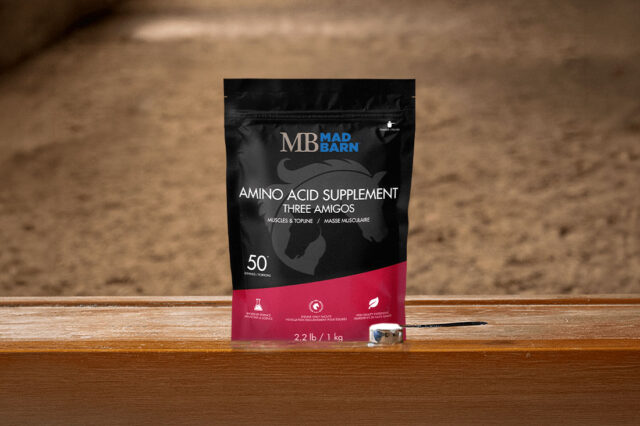
Three Amigos: When Amino Acids Are the Missing Link
For horses that need targeted topline support, Three Amigos is the clearest fit. Muscle is made largely of protein, but dietary protein must be broken down into amino acids before the horse can use it to build, maintain, or repair tissue. Essential amino acids are especially important because the horse cannot produce enough of them on their own; they must come from the diet.
The three limiting amino acids most often discussed in equine diets are lysine, methionine, and threonine. A limiting amino acid is the essential amino acid in shortest supply relative to the horse’s requirement. If one is too low, the horse may not be able to make efficient use of the other amino acids present in the diet, even when total protein appears sufficient.
Mad Barn’s Three Amigos focuses on that bottleneck. Rather than providing a broad amino acid blend that may include nutrients already available in adequate amounts, it supplies lysine, methionine, and threonine in a targeted ratio designed to support muscle protein synthesis, maintenance, recovery, and topline condition.
This makes Three Amigos most appropriate for horses with a sound nutritional foundation that still lack muscle definition, topline development, or recovery. These horses may be eating enough, and may even be receiving adequate crude protein, but the amino acid profile of the total diet is not strong enough to support the desired response.
Three Amigos is not a vitamin and mineral balancer and it is not a calorie source. It works best as part of a balanced program that includes forage, adequate energy, micronutrient support, and consistent exercise. Used in the right context, it can help remove a nutritional bottleneck that may otherwise limit progress.
Omneity: Building the Nutritional Base
For many horses, the better starting point is not a narrow topline product but a stronger foundation. Omneity® is a complete vitamin and mineral balancer designed to help fill common gaps in forage-based diets. It provides essential vitamins, minerals, amino acids, digestive enzymes, yeast, and a full spectrum of B-vitamins to support nutrient utilization, hindgut health, and normal metabolic function.
This foundation matters because muscle health depends on more than protein. Vitamin E and selenium help protect muscle cells from oxidative stress. Magnesium and potassium support normal muscle contraction and relaxation. B-vitamins are involved in energy metabolism. Trace minerals such as zinc, copper, and manganese contribute to protein use, connective tissue integrity, and tissue repair.
For horses on forage-only programs, or for horses receiving fortified feeds below the recommended feeding rate, micronutrient gaps are common. The horse may have enough calories and enough protein, yet still lack the vitamin and mineral support needed for muscle metabolism, recovery, and response to training.
In those cases, Omneity® helps establish the nutritional platform that a topline program depends on. It does not replace a targeted amino acid supplement when lysine, methionine, and threonine are limiting, but it helps ensure the rest of the diet is not quietly holding the horse back.
Available as Omneity® Premix or Omneity® Pellets, this balancer gives owners a practical daily way to supply broad-spectrum nutrition even when forage quality or intake changes across the season.
AminoTrace+: Enhanced Support for Metabolic and Performance Horses
Some horses need more targeted nutritional support than a standard balancer provides. AminoTrace+ is designed for horses with higher demands, including those in heavier work, those with metabolic considerations, and those consuming high-iron forage that requires more precise mineral balancing.
For performance horses, heavier exercise increases demands related to muscle maintenance, recovery, antioxidant defense, and tissue repair. These horses may require higher levels of nutrients such as vitamin E, zinc, copper, and key amino acids to support normal muscle function and long-term performance.
For horses with metabolic concerns such as EMS, PPID, insulin dysregulation, or a history of laminitis, the feeding program must support healthy metabolism without adding unnecessary sugar or starch. These horses may also benefit from enhanced antioxidant support and more carefully balanced trace minerals.
High-iron forage can complicate mineral balance because excess iron may interfere with copper and zinc absorption. Secondary trace mineral imbalances can influence hoof quality, coat condition, immune function, antioxidant activity, and overall nutrient use. AminoTrace+ is formulated with those challenges in mind, making it a strong choice when the forage profile calls for more than basic balancing.
By combining enhanced vitamin, mineral, amino acid, and antioxidant support, AminoTrace+ helps build the nutritional base for muscle function, topline development, healthy condition, and performance in horses with more complex needs.
W-3 Oil: Cool Calories for Condition
Not every weak-looking topline begins with protein quality. Some horses simply do not consume or absorb enough calories to support healthy condition. Picky eaters, senior horses with dental limitations, horses on low-quality forage, those with limited intake, and horses with digestive challenges may all struggle to keep weight on.
When energy intake is too low, the horse may look thin, thrifty, or weak through the topline. In that case, adding more amino acids without addressing calories may not create the desired change. The body needs adequate energy before it can reliably support weight, work, and muscle maintenance.
W-3 Oil offers a concentrated fat source that can increase calorie density without relying on larger grain meals. Fat supplies “cool calories,” meaning it provides digestible energy without the same starch and sugar load that can be a concern when grain is increased too quickly.
Mad Barn’s W-3 Oil also supplies omega-3 fatty acids, including DHA, along with natural vitamin E. It can support weight maintenance, coat quality, overall condition, and a more gut-friendly feeding program for horses that need additional energy.
W-3 Oil is most appropriate when body condition is the primary limitation. For horses with weak topline, it should be used as one part of a full program that also includes balanced vitamins and minerals, adequate essential amino acids, and the right exercise plan.
Choosing the Right Program
The right topline strategy depends on the horse in front of you. Many horses benefit from a combination approach, but the order matters. A horse with obvious nutrient gaps may need the diet balanced first. A horse in good condition but lacking muscle may need targeted amino acids. A horse that is thin may need calories before topline gains become visible.
Choose Three Amigos when the horse is in good body condition, receives adequate calories and total protein, but still lacks topline definition or does not develop muscle as expected in consistent work.
Choose Omneity® when the horse is on a forage-based diet without a complete vitamin and mineral balancer, is fed fortified feed below label rate, or needs a broad nutritional foundation for health, condition, and response to training.
Choose AminoTrace+ when the horse has metabolic concerns, high-iron forage, higher nutrient demands, or needs enhanced amino acid, antioxidant, and mineral support in one product.
Choose w-3 Oil when the horse is thin, ribby, under-conditioned, or needs more calorie-dense energy without added starch or sugar.
Topline Support at a Glance
| Product | Best For | Primary Role | Why Choose It |
| Three Amigos | Targeted topline support when amino acid intake or protein quality is limiting | Limiting amino acids | Supplies lysine, methionine, and threonine; supports muscle protein synthesis and maintenance |
| Omneity® | Horses needing a complete vitamin and mineral foundation | Diet balance | Provides broad daily nutrition with vitamins, minerals, amino acids, digestive enzymes, yeast, and B-vitamins |
| AminoTrace+ | Horses with metabolic concerns, high-iron forage, or higher nutrient demands | Enhanced nutritional support | Provides targeted mineral, antioxidant, and amino acid support for more complex needs |
| W-3 Oil | Horses needing condition, weight support, or extra calories without starch | Calorie-dense fat and DHA support | Provides cool calories, omega-3 fatty acids, and support for coat and overall condition |
The most effective program addresses the primary limitation first. Once the foundation is in place, additional support can be layered in to match the horse’s workload, forage profile, metabolic status, and long-term condition goals.
Final Recommendation
A topline program should begin with a balanced, forage-based diet, adequate calories, high-quality protein, appropriate vitamin and mineral intake, and consistent exercise. Supplements are most effective when they support a specific nutritional need rather than replace management, conditioning, or veterinary care.
For horses where amino acid supply is the limiting factor, Three Amigos is the most targeted choice to support muscle protein synthesis and topline maintenance. For most forage-based horses needing a complete nutritional foundation, Omneity® is the most practical starting point. For horses with metabolic considerations, higher nutrient demands, or complex mineral profiles, AminoTrace+ offers a more specialized option. When overall body condition is the main concern, w-3 Oil can help increase calorie intake and support weight maintenance and appearance.
If the answer is not clear, review the whole diet before choosing a supplement. For persistent topline loss, unexplained weight loss, poor appetite, pain, or multiple nutrition concerns, work with your veterinarian and an equine nutritionist. A personalized assessment can help identify whether the horse needs amino acids, calories, mineral balance, forage changes, or a different conditioning plan. Owners can also book a free consultation for individualized feeding support.