Choosing the Right Hoof Supplement for Stronger, Healthier Feet
Strong feet have always been part of the quiet work behind every sound horse. They rarely receive the attention given to a winning round, a clean test, or a confident school, but they are present in all of it. Healthy hooves help a horse stay comfortable, hold balance, recover from work, and move forward with the confidence riders depend on every day.
For many owners, the challenge begins when hoof quality starts to slip. A farrier may notice a softer wall, a shoe may not stay on as well as it once did, or a crack may keep returning despite careful trimming. In those moments, it is tempting to reach for the first hoof product that promises faster growth. The better question is usually broader: what does this horse need nutritionally to build better hoof horn over time?
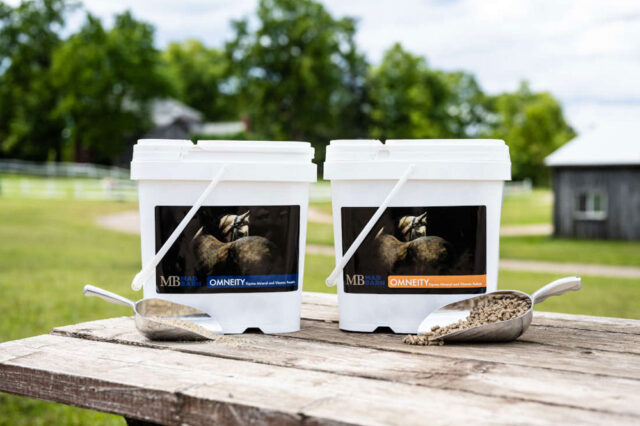
Mad Barn nutritionists generally start with the whole diet, not a single ingredient. Hoof horn is made continuously, and the quality of new growth reflects the nutrients available during that process. For many horses, the first step is a complete vitamin and mineral foundation such as Omneity® Pellets, which provides the trace minerals, amino acids, vitamins, and biotin that are commonly missing or under-supplied in forage-based feeding programs.
For horses with more demanding needs, especially those managing insulin dysregulation, Equine Metabolic Syndrome, PPID, laminitis history, or high-iron forage, AminoTrace+ offers a more concentrated approach. It is formulated for horses that need advanced mineral, antioxidant, and metabolic support while keeping sugar and starch low.
The most effective hoof supplement is not always the one labelled most boldly for hooves. It is the one that corrects the nutritional gap that is limiting hoof growth, structure, and resilience in the individual horse.
When Does a Horse Need Hoof Support?
Hoof concerns often build gradually. A horse may go through a wet spring with more chipping than usual, or the wall may become brittle through a dry summer. Some horses grow slowly enough that they struggle to recover from normal trimming or seasonal wear. Others hold shoes poorly, develop wall separation, or become tender on hard ground.
These changes may involve farrier balance, turnout conditions, workload, genetics, or previous disease. Nutrition, however, is one of the few underlying factors that can be improved every day. The hoof wall is living tissue before it becomes the hard structure visible below the coronet, and it needs a steady supply of raw materials to develop properly.
A horse on hay, pasture, and a small amount of fortified feed may look as though its diet is complete, but many fortified feeds only supply full vitamin and mineral levels when fed at the manufacturer’s recommended rate. Horses receiving less than that rate often need a separate balancer. In these cases, Omneity® Pellets can be used to provide a consistent daily supply of the nutrients required for normal hoof production without adding unnecessary calories.
The goal is not to change the hoof that already exists. Existing horn cannot be rebuilt from the inside. Instead, nutrition improves the quality of new horn as it grows down from the coronary band. This is why hoof programs are measured in months, not days.
What Usually Goes Wrong
Hoof quality reflects a network of internal and external influences. Turnout footing, moisture, trimming schedule, shoeing strategy, workload, and disease history all matter. Yet when several horses in the same barn show similar hoof concerns, or when a horse’s feet improve after the ration is balanced, nutrition is often part of the story.
The hoof wall is built largely from keratinized tissue. To make that tissue well, the horse needs amino acids for protein synthesis, trace minerals for enzyme systems and structural integrity, vitamins for cellular turnover, and antioxidants to help protect tissues during normal metabolism. When one part of that supply chain is weak, the final horn may be slower growing, more fragile, or less able to handle environmental stress.
Common nutritional patterns seen in horses with poor hoof quality include low copper and zinc intake, low or poorly balanced amino acid supply, inconsistent vitamin and mineral intake, high dietary iron that competes with copper and zinc, and insufficient biotin for horses that would benefit from additional support. These patterns are especially common in forage-based diets because forage mineral levels vary widely by region, soil, harvest timing, and storage.
A horse can also have enough calories and still lack the specific nutrients required to build strong feet. This is why “good weight” and “balanced diet” are not always the same thing.
Signs Owners and Farriers Notice First
Many hoof problems are noticed first by the farrier. The wall may feel weaker under the tools, the horn may not hold nails well, or the hoof capsule may show more flares and separation than expected for the trimming cycle. Riders may notice increased chipping, slower growth, or a horse that is more careful on hard ground.
- Cracks, splitting, and repeated wall separation, especially when they return after corrective trimming.
- Slow hoof growth that makes it difficult to maintain balance or recover from wear.
- Brittle, shelly, or crumbly horn that breaks at the edges or chips between appointments.
- Thin soles or increased sensitivity on firm footing, gravel, or after harder work.
- Shoes that loosen early or nail holes that do not hold as well as expected.
These signs do not prove a single deficiency. They are clues that the full management picture should be reviewed. The best results usually come when farrier care, turnout conditions, veterinary input, and nutrition are addressed together.
The Nutrients Behind Strong Hoof Horn
A healthy hoof is the result of many nutrients working at once. Supplementing only one ingredient may help in select situations, but it will not solve a broader dietary imbalance. The foundation should be built around the nutrients most consistently involved in hoof formation.
Copper and Zinc
Copper and zinc are among the most important trace minerals for hoof strength. Zinc supports normal keratin formation and cell turnover. Copper is involved in enzymes that help cross-link structural proteins in keratin and connective tissue. Together, they contribute to a tougher, more resilient hoof wall.
The challenge is that many forages are low in one or both minerals, while iron is often high. Excess iron can reduce the availability of copper and zinc, even when the diet appears adequate on paper. This is one reason horses on high-iron hay or water may need more than a basic feeding program.
Amino Acids
Hoof horn is protein-rich tissue, which makes amino acid supply essential. Lysine, methionine, and threonine are the amino acids most likely to limit protein synthesis in the equine diet. Methionine is particularly relevant because it contributes to sulphur-containing amino acids used to form strong bonds within keratin.
When protein quality is low, adding minerals alone may not create the desired change. The horse still needs a balanced supply of limiting amino acids alongside the vitamin and mineral support required for hoof growth.
Biotin and Vitamins
Biotin remains one of the best-known hoof nutrients. It is involved in metabolic pathways connected to keratinized tissues, and research supports its use at meaningful daily intakes when fed consistently. Still, biotin works best as part of a complete program. If copper, zinc, amino acids, or total diet balance are lacking, biotin alone may disappoint.
Vitamin A contributes to normal cell growth and differentiation, while vitamin E supports antioxidant protection. These nutrients are not always marketed as hoof ingredients, but they help maintain the cellular environment required for healthy tissue growth.
Why Patience Matters
Hoof improvement is one of the slower rewards in horse management. The hoof wall grows only a few millimetres each month, so visible change must grow into view. Owners may see better new horn at the coronary band before they see a stronger hoof capsule overall.
A consistent nutrition program needs to be maintained through full growth cycles. Starting and stopping supplements, changing feeds frequently, or using short trials makes it difficult to judge whether a product is working. In most cases, a fair assessment takes several months, and a full hoof wall may take close to a year to grow out.
This timeline also explains why hoof quality can seem to lag behind improvements in coat, topline, or general condition. The horse may be responding internally long before the lower hoof wall shows it.
What to Look for in a Hoof Supplement
The strongest hoof programs tend to be practical rather than complicated. A good supplement should fit the rest of the ration, supply nutrients at meaningful levels, avoid unnecessary overlap, and be easy enough to feed every day. Palatability also matters, because the most carefully formulated product cannot help if the horse leaves it in the feed tub.
For most horses, the most useful product is not a narrow hoof formula but a complete balancer that closes common gaps in forage-based diets. It should provide organic trace minerals, limiting amino acids, biotin, vitamins, and no added iron. It should also avoid excess sugar, starch, and fillers, particularly for easy keepers.
Mad Barn offers two main pathways. Omneity® Pellets is the broad, everyday choice for most horses that need a balanced foundation. Omneity® Premix provides the same core concept in a concentrated powdered format for barns that prefer a lower feeding rate. For more complex hoof and metabolic cases, the advanced low-NSC formula supplies higher levels of several key nutrients.
Best Overall: A Complete Foundation for Most Horses
Omneity® Pellets are a practical first choice for horses whose hoof issues are mild to moderate or whose diets are likely missing consistent vitamin and mineral fortification. The formula is designed to balance the whole ration rather than chase one hoof ingredient at a time.
This matters because poor hooves are rarely about biotin alone. They often reflect a combination of low trace minerals, uneven amino acid intake, insufficient vitamins, and the mineral antagonism created by high iron. A complete balancer addresses the system that produces hoof horn rather than focusing on a single visible symptom.
Owners often choose a pelleted format when feeding picky horses or horses that do not receive much carrier feed. Pellets can be easier to serve consistently in small rations, and consistency is central to hoof improvement.
For barns that prefer a powder or need an economical option for multiple horses, Omneity® Premix delivers the same type of nutritional foundation in a more concentrated form. It is well suited for horses already eating a mash or carrier feed and for feeding programs where the lowest possible inclusion rate is preferred.
Both formats are intended to support hoof horn quality as part of the total diet. They also help support coat condition, topline nutrition, antioxidant status, and overall wellness, which is why some owners are able to simplify their feed room by replacing several overlapping products with one balanced formula.
In Mad Barn’s field observations, horses fed the Omneity program showed improved hoof growth rate, and customer reports frequently mention stronger horn, better farrier feedback, improved shoe retention, and healthier new growth. Results still depend on the rest of management, but a complete daily balancer gives many horses the foundation they were missing.
Best for Complex Hoof Problems: Advanced Mineral and Metabolic Support
AminoTrace+ is designed for horses that need a more targeted level of nutritional support. These may be horses with ongoing hoof problems despite a reasonable base diet, or horses with metabolic risk factors that affect hoof comfort, circulation, inflammation, and tissue quality.
This group often includes horses with insulin resistance, Equine Metabolic Syndrome, PPID, a history of laminitis, or high-iron hay and water. In these cases, hoof support cannot be separated from metabolic management. The ration must provide minerals, amino acids, antioxidants, and support for normal insulin and glucose metabolism without adding unnecessary sugar, starch, or calories.
The formula provides elevated levels of copper and zinc to help address mineral imbalances, along with magnesium and chromium to support normal insulin sensitivity. It also includes natural vitamin E, selenium, manganese, yeast, mannan oligosaccharides, and yucca schidigera extract to support antioxidant defences, hindgut function, immune balance, and a normal inflammatory response.
Its very low-NSC profile makes it appropriate for easy keepers and horses that cannot rely on large servings of fortified feed to meet micronutrient requirements. That is especially important for laminitis-prone horses, where owners often need to limit calories while still providing a complete nutrient profile.
One recurring theme in owner reviews is farrier feedback. Many report that the farrier notices tighter growth, improved wall quality, healthier frogs, and stronger feet after the horse has been on a consistent program. These are not overnight changes, but they are the type of gradual improvements that matter most in hoof rehabilitation.
Choosing Between the Two Main Formulas
The choice between a general balancer and an advanced metabolic formula depends less on the label and more on the horse in front of you. A healthy horse with average hoof concerns usually needs a complete foundation first. A horse with persistent hoof problems, metabolic disease, laminitis history, or high-iron forage may need a more concentrated plan.
| Horse profile | Best fit | Why it may suit the horse |
| Forage-based diet, light fortified feed, mild cracks or brittle horn | Omneity® Pellets | Provides broad daily vitamin, mineral, amino acid, and biotin support without extra calories. |
| Barns feeding many horses or horses already receiving a mash | Omneity® Premix | Offers the same foundation in a concentrated powder with a lower inclusion rate. |
| Persistent hoof concerns, high-iron forage, insulin resistance, EMS, PPID, or laminitis history | AminoTrace+ | Provides higher levels of key nutrients plus low-NSC metabolic support. |
The two complete formulas are not meant to be fed together. Combining them would create unnecessary overlap in vitamins and minerals. Instead, select the one that best matches the horse’s risk profile, then add targeted nutrients only when there is a clear reason to do so.
When Targeted Supplements Make Sense
Single-purpose supplements still have a place. They are most useful when a diet analysis, forage test, veterinary diagnosis, or nutrition consultation identifies a specific gap. They are less useful when they are layered onto a ration that has not yet been balanced.
Zinc and Copper
When forage or water is high in iron, additional copper and zinc may be needed to restore mineral balance. 3:1 Zinc Copper can be used when those specific minerals need targeted support alongside an otherwise complete program. This approach is most appropriate when the broader diet has already been assessed.
Biotin
For horses with slow-growing or brittle horn, Biotin may be useful once the rest of the diet is providing enough minerals and amino acids. It should be viewed as a support for keratin production, not a replacement for a balanced ration.
Amino Acids
When forage quality is poor or protein quality is low, hoof growth may be limited by the supply of lysine, methionine, and threonine. Three Amigos can help fill that gap, especially for horses whose hoof concerns appear alongside poor topline, weak muscling, or low-quality protein intake.
Jiaogulan
Some horses with laminitis history or metabolic dysfunction may need support beyond direct hoof-building nutrients. Jiaogulan is used as an herbal option to support normal nitric oxide production, vascular function, and peripheral circulation. It is best considered part of a broader veterinary, farrier, and nutrition plan rather than the first step for simple brittle hooves.
Building a Hoof Program That Works
A thoughtful hoof program begins with the basics. The horse should have regular farrier care, a trim or shoeing plan suited to conformation and workload, turnout conditions that do not constantly weaken the wall, and veterinary attention for pain, laminitis risk, infection, or lameness. Nutrition supports these efforts, but it does not replace them.
The next step is to understand the diet. Forage is the foundation of most equine rations, and its mineral content can vary dramatically. Hay analysis can reveal whether copper and zinc are low, iron is high, protein is limited, or the horse needs a different balancing strategy. Even without a forage test, reviewing the ration can identify common gaps, especially when fortified feed is being fed below label rate.
Once the foundation is understood, choose the supplement that addresses the largest gap with the least overlap. For most horses, that means starting with Omneity® Pellets or the powdered format. For horses with metabolic concerns or stubborn hoof problems, the advanced formula may be the more appropriate first choice.
After that, give the program time. Take photos of the hoof at the start, mark the date, and compare new growth at the coronary band over several trimming cycles. Ask the farrier what they notice in wall quality, sole depth, frog health, and nail hold. These observations are often more useful than judging the hoof from one week to the next.
If progress stalls, revisit the full picture rather than simply adding more products. A horse may need a forage analysis, a veterinary workup for metabolic disease, changes to turnout footing, a revised trim schedule, or more careful calorie control. Hoof quality improves most reliably when every part of the management plan is aligned.
A Practical Selection Guide
The following guide can help narrow the starting point before a more detailed ration review.
| Situation | Suggested direction | Notes |
| General hoof quality concerns, mild chipping, slow growth, or brittle horn | Omneity® Premix | Use when a powder fits the feeding routine and a complete daily foundation is needed. |
| Picky horse, small feed meals, or a barn wanting a simple pelleted balancer | Omneity® Pellets | A convenient format for consistent intake and broad diet balancing. |
| Horse with high-iron forage, metabolic disease, laminitis history, or persistent hoof problems | AminoTrace+ | Higher copper and zinc levels help correct mineral imbalances caused by excess iron |
| Balanced diet with one confirmed gap | Targeted nutrient only | Use single-nutrient products to solve a defined problem, not as a substitute for a complete ration. |
In practice, owners often start with a complete daily balancer when the horse is otherwise healthy and needs reliable nutritional coverage. They move to a more advanced metabolic formula when hoof problems are part of a larger pattern involving insulin, laminitis risk, or high iron.
The Role of the Farrier and the Barn Environment
Nutrition works best when it supports a hoof that is being asked to function in a fair environment. A balanced ration can improve the horn that grows in, but it cannot undo constant exposure to deep mud, repeated wet-dry cycles, excessive concussion, or a trim cycle that leaves the hoof out of balance for too long. This is why farrier feedback should be part of any hoof supplement plan.
A farrier can often see change before it becomes obvious to the rider. The new growth below the coronary band may feel denser, the wall may rasp more cleanly, or the white line may look tighter. These details help confirm whether nutrition is improving the building material. They also help identify when another issue, such as thrush, mechanical imbalance, or unresolved pain, is holding the horse back.
Barn environment also shapes results. Hooves need moisture balance, but standing for long periods in wet bedding or mud can soften structures and make weak horn more vulnerable. Very dry conditions can create brittleness, especially when the wall is already poor quality. Good drainage, regular turnout management, clean bedding, and appropriate exercise all help protect the new horn as it grows down.
Owners should also be careful when judging a supplement during a difficult season. A horse starting a nutrition program during spring mud or a hard, dry summer may be improving internally even while the lower wall continues to chip. Photos taken at each farrier visit, notes on shoe retention, and comments from the hoof care team create a more accurate record than memory alone.
The most reliable programs are simple enough to repeat: feed the chosen balancer every day, avoid unnecessary overlap, keep sugar and starch appropriate for the horse, review forage when possible, and maintain regular hoof care. When those pieces are in place, the horse has the best chance to grow horn that is not only faster, but stronger and more useful.
Common Mistakes When Buying Hoof Supplements
One of the most common mistakes is treating every hoof issue as a biotin problem. Biotin can be valuable, but it is not a complete hoof program. If the horse is short on copper, zinc, methionine, lysine, vitamin E, or total diet balance, a biotin-only product may make little visible difference. Another common mistake is adding several products that duplicate the same nutrients, increasing cost without improving the ration.
Owners may also switch products too quickly. Because hoof growth is slow, a supplement trial that lasts only a few weeks is rarely meaningful. Unless the horse reacts poorly or a veterinarian recommends a change, it is better to choose a sound program and give it enough time to show through new growth.
Finally, product selection should match the horse, not the marketing claim. A healthy performance horse, an easy keeper with insulin dysregulation, a senior with PPID, and a broodmare on high-iron hay may all need hoof support, but they do not necessarily need the same formula. The best choice is the one that fits the ration, the risk factors, and the management reality in the barn.
Final Recommendations
The best hoof supplement is the one that corrects the reason the hoof is not growing as strongly as it should. For many horses, that reason is not a single missing ingredient but an unbalanced ration that does not consistently provide the trace minerals, amino acids, vitamins, and biotin required for hoof horn formation.
For the average horse on hay, pasture, and light feed, a complete vitamin and mineral foundation is usually the most efficient place to begin. Omneity® Premix offers that foundation in powder form, while the pelleted format offers similar support in a format many horses readily eat.
For horses with more complicated histories, the decision should account for the whole animal. Metabolic dysfunction, high-iron forage, laminitis risk, and persistent hoof problems all increase the need for a more strategic formula that supports mineral balance, antioxidant status, and normal metabolic function without added sugar and starch.
Targeted supplements can be valuable, but they should answer a specific question. Does the horse need more copper and zinc? Is biotin the missing piece after the ration is balanced? Are amino acids limiting protein synthesis? Is circulation support part of a laminitis management plan? Clear questions lead to cleaner feeding programs.
Healthy hooves are not built by shortcuts. They are built by steady farrier care, appropriate management, and a ration that supplies the nutrients required for new horn to grow in stronger than the horn before it.