Written by: Dr. Priska Darani, Ph.D., PAS
Reviewed by: Dr. Christine Latham, Ph.D.
Veterinary Review: Dr. Fran Rowe, DVM, PAS
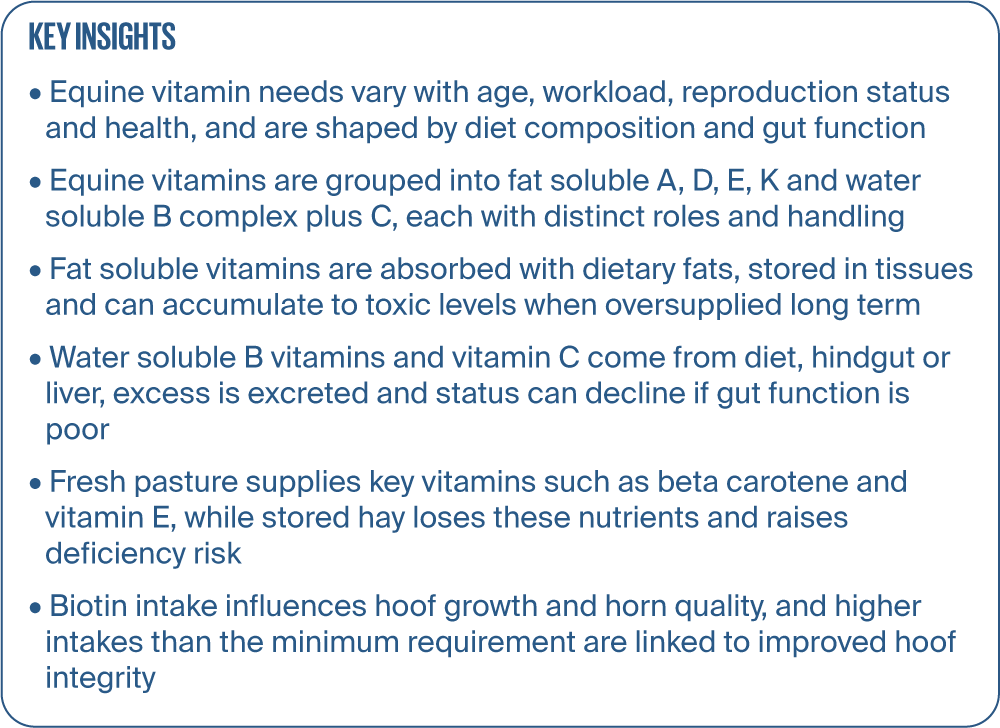
Vitamins are organic compounds that are essential for all living things. Vitamins have diverse roles within the horse’s body, affecting energy metabolism, growth and repair, muscle function, neurological health, immune function and much more.
Vitamins function as cofactors for metabolic reactions, including the breakdown of sugars and fats for energy, hormone synthesis, nerve impulse transmission, muscle contraction and more.
Your horse’s current vitamin requirements depend on age, exercise level, reproductive status (pregnant and lactating) and health status.
Whether your horse is meeting their requirement for a given vitamin depends primarily on what is in their feeding program, but can also be affected by gut health and endogenous (internal) production.
Other factors such as genetics (breed), nutrient interactions and health status can also play a role in how well the body absorbs and uses vitamins.
Forages can vary greatly in vitamin levels depending on the type of forage and when/how it is harvested and stored. As an example, fresh pasture is generally a good source of Vitamin E, but this vitamin degrades quickly after hay and grasses are cut.
Most horses should receive a vitamin and mineral premix to prevent deficiencies and ensure optimal health. Hoof quality, skin and coat condition, energy levels, mood and resistance to illness are all improved when vitamin and mineral requirements are met.
To find out whether your horse is meeting their vitamin requirements, submit your horse’s diet for analysis by our equine nutritionists.